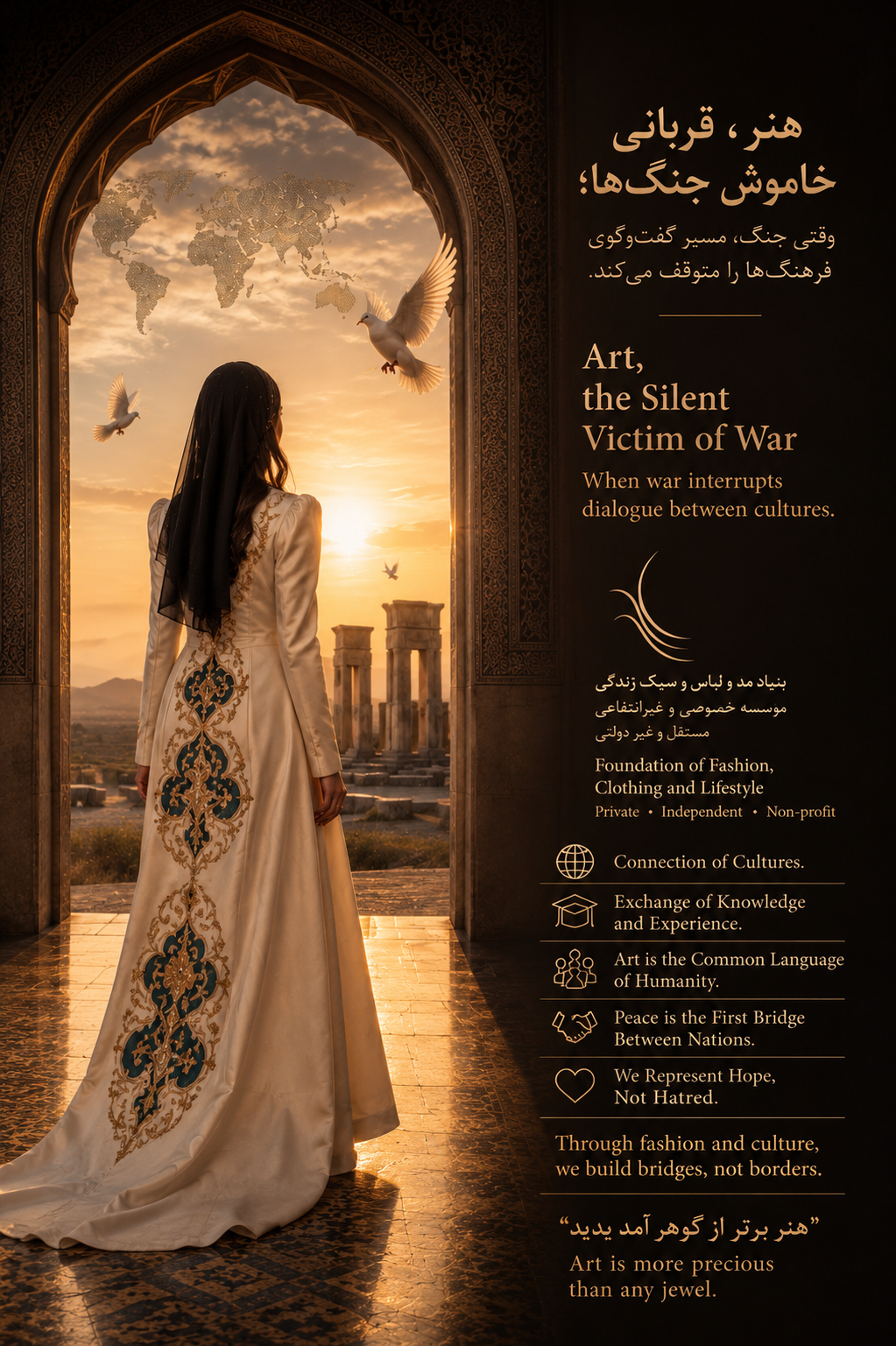
Ms. Hadis Pazouki, the CEO of the Fashion, Clothing, and Lifestyle Foundation, on the occasion of the 12th Fajr Fashion and Clothing Festival at the Sa’dabad Historical Cultural Complex
Note: If you visit the market today and look at the shop windows, you will see that many issues have been resolved. In recent years, the Ministry of Culture and Islamic Guidance has taken significant measures to organize the fashion and clothing industry.
Local clothing in Iran has a rich history, with both men and women wearing traditional attire in the past. However, as societies modernize and urbanize, local clothing has become more of a symbol than a commonly used garment. Today, original and beautiful Iranian clothing pieces are only seen in certain parts of the country.
Back to history
Iran is the cradle of art and civilization, and the fashion and clothing style in this country has been executed with sophistication and extraordinary designs for years. From north to south, and from east to west, each has its own style and context for women’s and men’s clothing.
Some of these days, clothes are either being discontinued or gathering dust in closets. Among all these clothes, Iranian women’s attire is more prominent because these clothing pieces symbolize culture and beliefs.
Local Iranian clothing, prevalent among Iranian ethnic groups, is designed in a way that reflects the zest of life, authenticity, and Iranian art. Some of the authentic ethnic groups in Iran still use local clothing, and you can find the culture, art, and beliefs of a tribe manifested in the design and sewing of their local clothing. Local clothing designs are very diverse, for example, young girls’ dresses and bridal wear, as well as clothing for middle-aged women, each have their unique designs, and men’s clothing also has its own diversity. In general, Iranian local clothing has specific names, philosophy, and various applications.
The most beautiful Iran’s local clothing is not limited to one city or ethnic group, but traditional clothing is worthy of all the people of this country. Beautiful local clothing acts as a gateway to experiencing the culture and civilization of each tribe.
We see different types of Iranian ethnic clothing in various movies and images and enjoy their beauty. However, only a very small number have a comprehensive knowledge of them and can distinguish the clothing of one tribe from another.
In the following, we have explained the differentiation of the clothing of the northern to southern ethnic groups in the country.
Global View
Clothing around the world is known as a representative of a part of the culture, history, and identity of each country. The presence of various ethnic groups like Gilak, Azeri, Kurd, Lur, Baluch, Qashqai, Arab, Bakhtiari, Turkmen, etc., in different corners of Iran and their different cultures have created a delightful diversity of colorful clothing in the country. In other words, in each cut, stitching, and embellishments of traditional Iranian clothing, one can find a symbol of the culture of each tribe or clan.
Clothing that is made from various types of fabrics and colors based on the different climates in different regions can also be a sign of a person’s identity, age, marital status, social position, and other similar factors. Although the use of these clothes is fading in some provinces, some Iranian ethnic groups still insist on wearing their specific traditional clothing, while others wear them for various celebrations and ceremonies.
In this article, you will become familiar with some of the beautiful local clothing used in various parts of Iran by different ethnic groups. Iran’s diverse climate, along with national customs, tribal cultures, has brought about various types of clothing in different parts of the country. These clothes, with their unique designs and different colors, individually represent a part of Iran’s cultural diversity.
Unlike urban societies that follow a uniform style in their clothing, people in different regions of Iran have different patterns of dressing. These patterns speak of a specific philosophy and behind all the patterns and colors, one can explore a wide range of Iranian traditions, cultures, and identities.
The philosophy of Iranian local clothing in different regions, based on environmental geography, age, marital status, social status, ethnicity, and other similar factors, is defined. The people in the north of Iran, inspired by their lush and vibrant nature, wear colorful and joyful clothes. People in the southern regions of the country balance the heat by wearing thin and cool clothes. The philosophy of clothing for people in the desert regions also has a strange harmony with their life geography, and therefore, they mostly go for white colors to endure the dry desert heat more comfortably.
In mountainous regions and among nomads, people use very loose trousers for easier movement, and in cold regions, they wear woolen hats and scarves on their heads to protect themselves from the cold. Overall, the philosophy of each of the local clothes of Iranian men and women is defined in harmony with their nature and way of life, as well as the cultural values of each ethnic group.
The Most Important Feature of Iranian Ethnic Clothing
The most common feature of Iranian ethnic clothing, especially women’s clothing in the past, was its great variety of colors. The ancestors of this land placed great emphasis on using colors in their clothes and believed that the color of the clothes should create spiritual vitality. From this perspective, traditional women’s clothing among different ethnic groups in this land displays a festival of various colors.
Usually, these clothes were adorned with various decorative stitches, stones, beads, and silk embroidery to create a dazzling appearance. In addition to beauty, the practicality of these clothes was also always considered, and even nomadic women, despite wearing long, loose, and multi-layered clothes, could easily perform their daily tasks.
Some of these clothes have changed over time for various reasons or have become less colorful; for example, the use of fabrics like silk with decorations like gold and silver in modern traditional clothes may not be economical. Some of the sewing and embroidery arts of the past have been either discontinued or forgotten, or do not fit in with newer tastes.
Now let’s review the fashion and clothing of different Iranian ethnic groups.
Local Kurdish Clothing
Local Kurdish clothing is one of the oldest and most beautiful traditional Iranian outfits, dating back to the Achaemenid period. Kurdish clothing is designed for different Kurdish tribes from Kurdistan to Ilam and Kermanshah, with slight variations but the same structure and authenticity.
Women’s Clothing
In the design of Kurdish women’s clothing, two parts, bodywear and headwear, are made from crepe or cotton fabrics with bright colors, and Kurdish women wear them with beautiful jewelry. Kurdish women’s headwear consists of Klav (hat), Shedeh (thick silk scarf), Sarvin (headband), and Lachak (thin silk scarf with three corners). Klav models include “Klavzar” hats, which are highly decorated and mainly used by brides and young women, and “Klavfas”, which only cover the top of the head and have less decoration compared to Klavzar. Kurdish women also use silk scarves with large necklines called “Rahsheti” and “Hevari” or “Kelati” which are silk four-cornered scarves used in ancient times for bridal dresses.
Kurdish women’s clothing is made up of Keras (long-collar shirt with long sleeves), Sukhmeh (sleeveless velvet shirt), Salteh (velvet shirt with sleeves for winter), Qua (long velvet coat worn over Sukhmeh and Keras), and Sharwall (wide Kurdish cotton pants).
Men’s Clothing
Kurdish men’s outfits are usually loose for easy movement among the mountains and difficult paths, including Keras, Patul (loose pants with tight fabric), Qua (top garment), waist shawl, Surani, and Klash (embroidered shoes).
Azeri Local Clothing
Azeri clothing uses bright and heavy colors, symbolizing bravery and valor. The fabrics used in Azeri local clothing are diverse, ranging from silk to wool, depending on the financial ability of individuals.
Azeri clothing consists of three parts, bodywear, headwear, and footwear.
Women’s headwear includes a hat, Araghchin (skullcap), Shawl, Headscarf, Charqad (a traditional headpiece), and Alacharshab (Colorful Chador), while their bodywear includes Quinik (long shirt), Jabkan (velvet dress worn over Quinik), Dan (dress), Shaltheh (short skirt), Vest, Khud (ordinary jacket), and Yal (velvet coat).
Azeri men’s clothing includes Araghchin, Quinik, hat, Arkhalegh (long coat), and Charoogh.
Baluchi Local Clothing
Baluchi local clothing is known for being the most expensive Iranian attire among tribes, fabricated from beautiful silk threads with colorful patterns and exquisite embroidery.
Baluchi Men’s Clothing
Baluchi men’s clothing is typically white, worn with loose pants, including Pag (headgear worn around the head), Soopi hat (embroidered hat), Pajang (loose pants with pleats), Sarinband (fabric belt), and Kush (leather shoes).
Baluchi Women’s Clothing
Baluchi women’s clothing includes Pajang, Teko (four-cornered garment), headband, Serig (large scarf from Teko), Dulaq (special Baluchi cloak), Tambu (loose skirt), and long striped dress.
Luri Local Clothing
Luri local clothing from Lorestan, Kohgiluyeh and Boyer-Ahmad, and Chaharmahal and Bakhtiari regions is colorful and inspired by nature, featuring patterns and designs on young girls’ attire.
Luri Women’s Clothing
Luri women’s attire consists of a Keras (long floral shirt), long velvet vest, Colonjeh (Short velvet vest), Yaal (velvet coat) and Shawal (two-part wide pants). For headband, they wear “Tareh” which is a normal scarf worn on normal days and Kelaghayi which is made of silk with a checkered pattern.
Luri Men’s Clothing
Luri men wear a felt hat, plain shirt, wide pants with narrow ankle cuffs, a long robe with an open front called Satareh, a woolen shawl around the waist, a Chowgha (sheepskin high-top), and Giveh (a kind of handmade shoe) shoes.
Abyaneh Local Clothing
Abyaneh local clothing features floral patterns and bright colors, recognized as one of the most beautiful Iranian traditional outfits and commonly seen in the village of Abyaneh on both men and women.
Abyaneh Women’s Clothing
Abyaneh women’s clothing includes a coat, Shaliteh, Yal (woolen coat), headband, floral scarf, knee-high socks, a Chorshab (a colorful fabric often featuring a four-square pattern, typically made of cotton or silk) for girls in yellow and for women in red, along with leather shoes.
Abyaneh Men’s Clothing
Abyaneh men wear embroidered pants symbolizing their marital status, along with a vest, coat, Giveh shoes, waist shawl, and a woolen hat.
Southern Local Clothing
Due to the warm climate, southern local clothing is unique with special colors and patterns inspired by the region and featuring Indian-inspired embroidery on the garments.
Southern Men’s Clothing
Southern men’s attire varies depending on their profession, usually consisting of a long shirt, hat, Long (a rectangular shaped cloth flag made of cotton or linen normally with a black emblem on a red background), handkerchief, coat, jacket, and Dagleh (A kind of long covering).
Southern Women’s Clothing
Southern women wear various types of clothings called Kandure (a traditional women’s clothing from the special local attires of Hormozgan province), Eskam, Gon, Neshteh, Kalowsh, Ajami, Astinfarakh, Arabic, Chinese, and Shalali which are made of satin. For formal occasions, southern women use brocade fabrics and also wear a Bandari Chador, burqa, and silk headscarf.
Khorasani Local Clothing
Khorasani local clothing is diverse due to the vastness of Greater Khorasan, exhibiting a wide range of local outfits similar to other regions in Iran.